
Planning & permitted development
Planning permission, without the fog.
The right planning route depends on the home, the proposal and the local context. Some projects need planning permission, some may fall within permitted development rights, and some need a closer check before either route can be relied upon.
Start With Your Home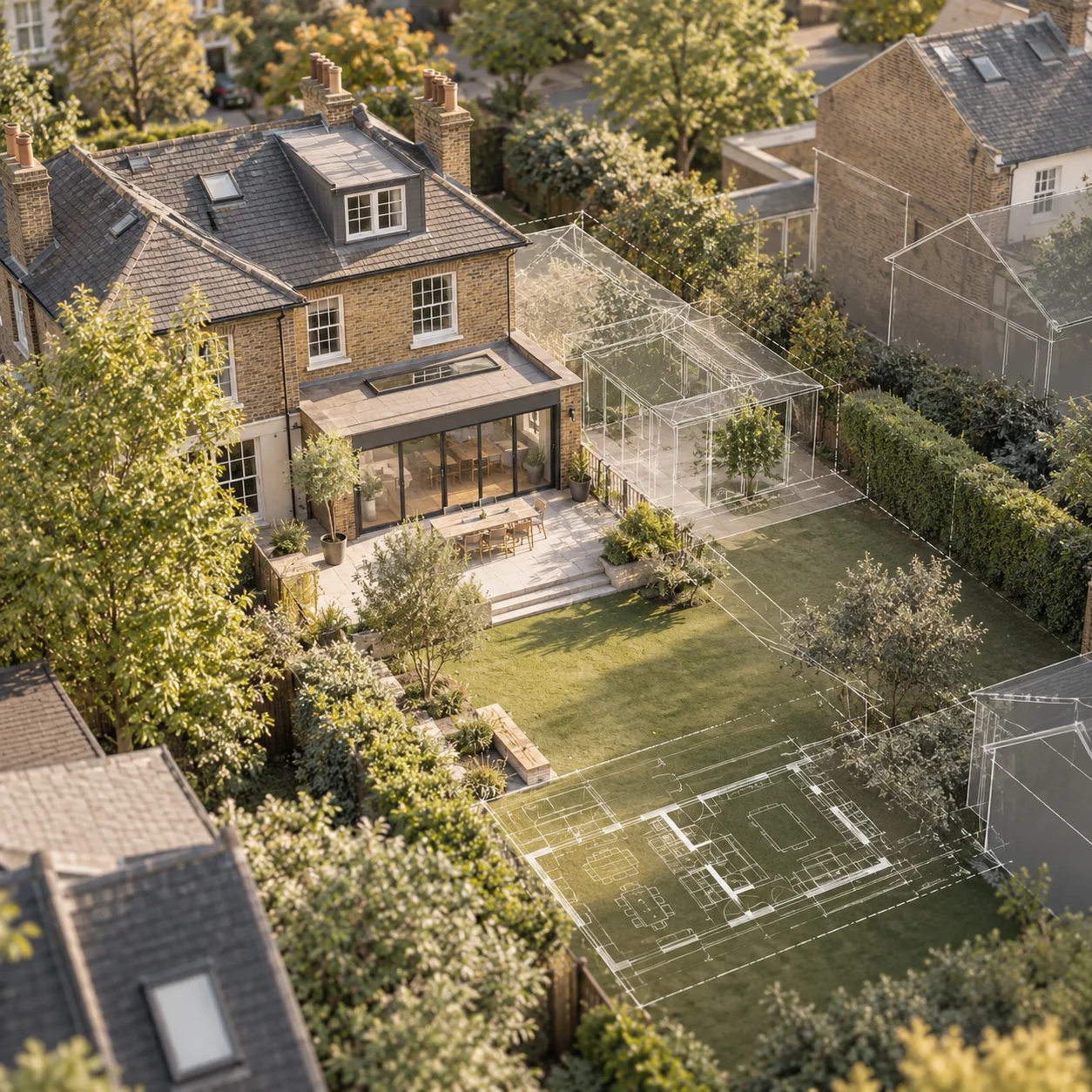
Conceptual · Planning routes + home context
Which route applies?
Start with the property, not the assumption.
There is no universal answer. The right route depends on the proposal, property type, location, planning history and any restrictions affecting the site.
Start With Your Home01
Planning permission
Where the proposal falls outside permitted development or the site has relevant constraints, a planning application may be required.
Open location page02
Permitted development
Some domestic changes may be possible within permitted development rights, subject to limits, conditions and any restrictions affecting the property.
Open location page03
Specialist check
Listed buildings, conservation areas, Article 4 directions, previous alterations and unusual sites can change the answer and may need more detailed review.
Open location page04
Open location page05
Open location page06
Open location page
Planning drawings
Clear drawings make the proposal easier to understand.
Planning drawings should communicate the existing home, the proposed changes and their relationship to the site clearly and consistently. The exact drawing set depends on the project and the application route rather than one fixed package.
Architectural DrawingsExisting condition
Plans, elevations and site information establish what is there now.
Proposed design
The proposed plans and elevations explain the architectural change being sought.
Context
Location, site relationships and other relevant information help place the proposal in its proper setting.
Do I need an architect for planning permission?
You do not have to appoint an architect for every planning application, but professional design input can help shape the proposal, prepare clear drawings and make sure the application reflects the property and context.
Can an extension be permitted development?
Some extensions can fall within permitted development rights, but the answer depends on the property, the size and position of the work, previous alterations and any local restrictions.
What drawings are needed for planning permission?
The required information varies by proposal and application type. It commonly includes existing and proposed drawings plus site or location information, but the exact package should be confirmed for the project.
What is a lawful development certificate?
It is a formal decision from the local planning authority confirming whether an existing or proposed use or development is lawful. It is often useful where a project relies on permitted development rights.
What happens in a conservation area?
Conservation status can change which permitted development rights apply and how proposals are assessed. The local context and the character of the area need to be considered as part of the design and planning route.
Can Love submit the planning application?
Where planning support is included in the appointment, Love can prepare and coordinate the application information and submission route for the project.
What if planning is refused?
The next step depends on the reasons for refusal and the project. It may involve revising the proposal, providing further information or considering another route. There is no one-size-fits-all answer.
Let’s start with a conversation
You do not need to work out the planning route before speaking to us.
Tell us about the home and the change you are considering. We can help establish the likely route and shape the design around the rules and context that actually apply.
Start With Your Home