
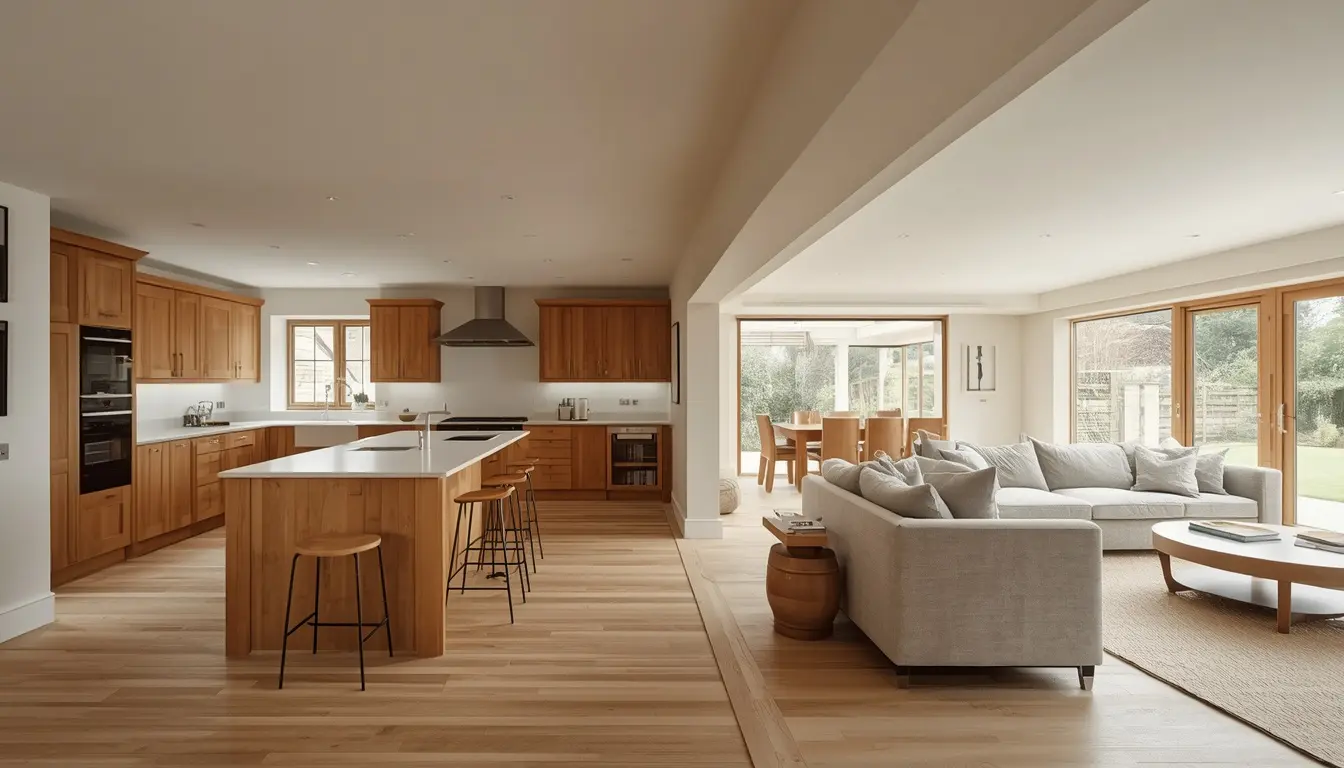
Home renovation cost is difficult to reduce to a single figure because “renovation” can mean anything from updating finishes to restructuring an entire house.
The most useful budget conversation begins by separating what is being kept, what is being changed and what is being added.
1. How much of the house is actually changing?
A renovation focused on a kitchen and a few rooms is a different project from one that reworks circulation, services, windows, bathrooms, floors and finishes across the entire home.
2. Structural alterations
Removing load-bearing walls, widening openings, moving stairs or altering floors and roofs can add structural design, temporary works and construction complexity.
See Structural Engineering & Calculations.
3. The condition of the existing building
Older services, hidden defects, damp, previous alterations and uneven construction can all change the scope once the building is opened up. The less certain the existing condition, the more contingency the project may need.
4. Kitchens and bathrooms
Kitchens and bathrooms combine services, finishes, fittings, joinery and equipment, so their specification can move the overall budget substantially.
5. Heating, electrics and other services
Whole-house renovation can expose the need to upgrade or reroute electrics, heating, plumbing, ventilation and drainage. Services are easier to coordinate when they are considered with the layout rather than after it.
6. Windows, doors and thermal performance
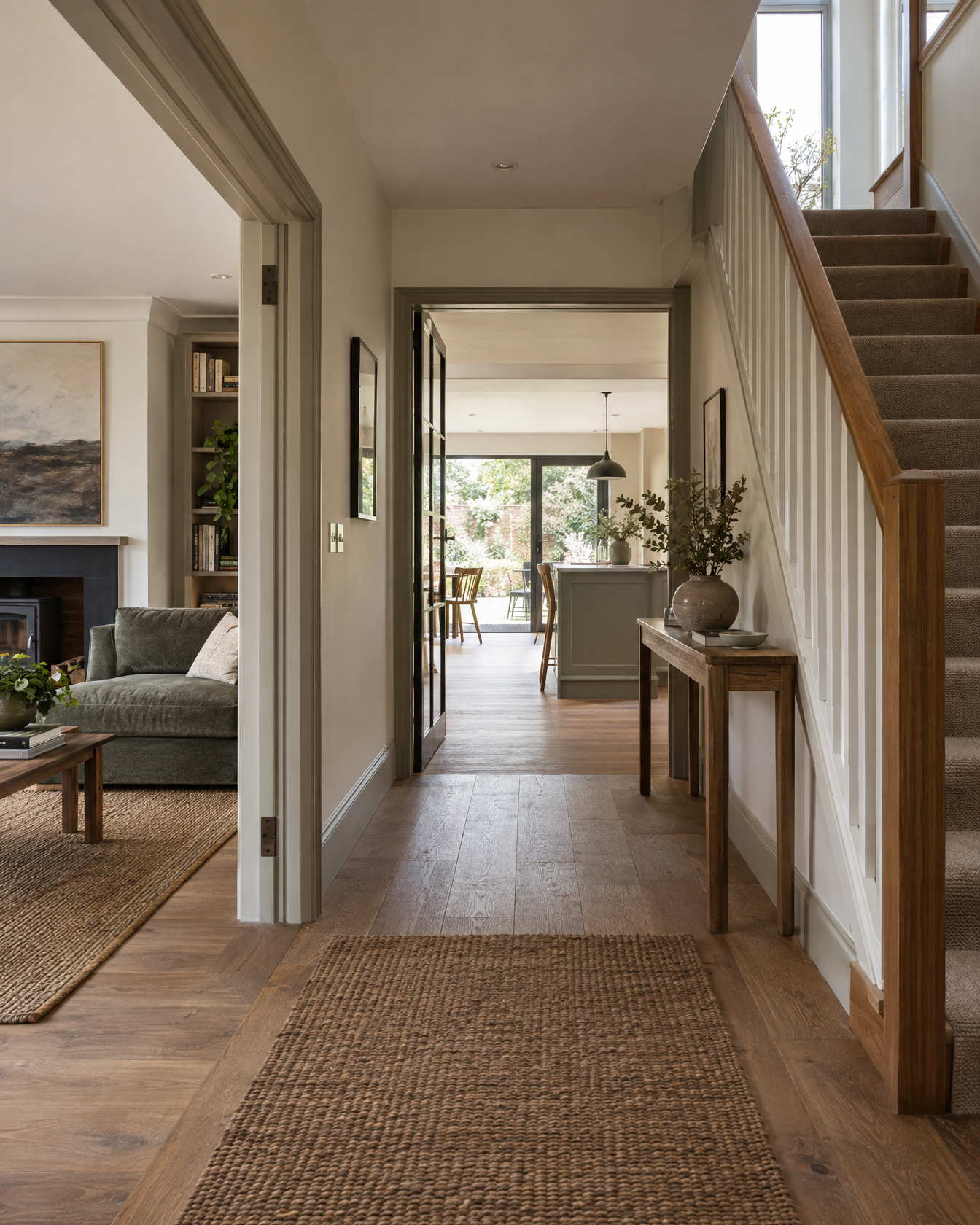
Replacing glazing, improving insulation and dealing with older building fabric can improve comfort and efficiency, but can also be a major part of the construction budget.
7. Specification and joinery
Flooring, lighting, doors, ironmongery, fitted storage and bespoke joinery can shift cost without changing the basic footprint at all.
8. Whether the home is occupied during the work
Phasing work around an occupied home can affect programme, sequencing and contractor efficiency. In some projects, completing more work in one coordinated phase can be simpler than repeated disruption.
9. Extension work hidden inside the renovation brief
Many major renovations also include extensions, loft work or other additions. The right budget should reflect the whole scope rather than separating the project into artificial labels.
10. Decisions that move late
Changing layouts, bathrooms, kitchens or structural openings after technical work or construction has started can create knock-on costs across several trades and drawings.
How do you make the budget more useful?
Start by defining the scope well enough to understand the major cost drivers. A clear architectural plan can help separate essential work, high-value design moves and specification choices that can be adjusted later.
Our Home Renovations page explains the wider design approach, and Whole House Renovation covers deeper reconfiguration.
If you are still deciding whether to renovate, extend or combine both, start with your home.